Table of Contents
- 1. Latest Diesel Procurement Update 2026
- 2. What the Policy Change Means for Industrial Buyers
- 3. Why PESO-Approved Fuel Storage Solutions Still Matter
- 4. 7 Business Benefits
- 5. Industry Applications
- 6. Mobile Bowser vs Static Tank
- 7. Selection Checklist
- 8. How Eastman Meters Supports Fuel Management
- 9. FAQs
- 10. Conclusion
Latest Diesel Procurement Update 2026: The 200-Litre Cap Has Been Withdrawn
The most important correction for industrial diesel buyers is that the 200-litre restriction is no longer active. The government described the June controls as temporary measures introduced to prevent hoarding, diversion, and black marketing during periods of fuel supply disruption. Once the supply situation improved, the order was officially withdrawn with effect from 1 July 2026.
Normal fuel-sale arrangements have resumed, so industrial users should not treat the June restriction as an active nationwide rule. However, the withdrawal does not make loose storage or uncontrolled fuel dispensing a recommended practice. Diesel remains a flammable product, and applicable petroleum regulations, fire-safety requirements, calibration standards, and local compliance rules continue to apply.
What the Policy Change Means for Industrial Diesel Buyers
The policy update gives businesses greater flexibility in diesel procurement, but it does not remove the operational challenges associated with industrial fuel management. Factories, hospitals, warehouses, construction sites, and other commercial facilities still require safe storage, controlled fuel transfer, accurate measurement, and complete accountability.
PESO-Approved Fuel Storage Solutions continue to address these operational requirements beyond the temporary government restriction. They help organizations improve safety, maintain accurate fuel records, reduce losses, and ensure uninterrupted business operations.
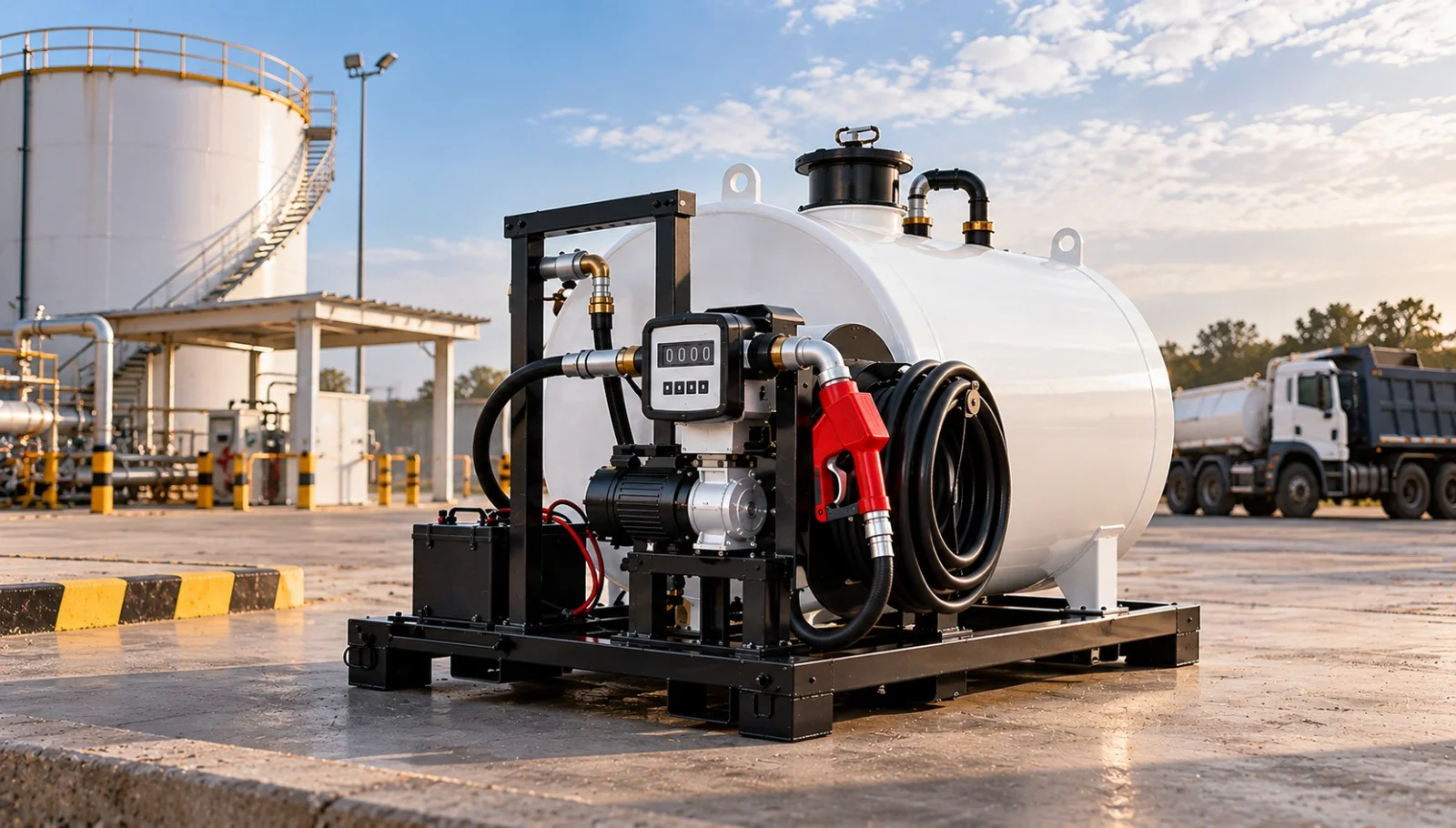
That is where PESO-Approved Fuel Storage Solutions create long-term value. A properly designed system may include a storage tank or mobile fuel bowser, dispensing pump, calibrated flow meter, hose reel, dispensing nozzle, filtration unit, and essential safety accessories to provide a reliable and efficient fuel management process.
Why PESO-Approved Fuel Storage Solutions Still Matter in 2026
PESO-Approved Fuel Storage Solutions should be viewed as risk-management and fuel-control infrastructure rather than simply storage equipment. Approval and licensing requirements depend on factors such as storage quantity, installation type, configuration, and site location. Buyers should always verify the applicable approvals and compliance requirements before installation.
Even after the restoration of normal retail diesel sales, PESO-Approved Fuel Storage Solutions continue to improve workplace safety by reducing manual handling and creating a structured, repeatable refuelling process instead of relying on funnels, loose fuel cans, or open barrels. This results in safer operations, better fuel control, and improved accountability across industrial sites.

7 Business Benefits of PESO-Approved Fuel Storage Solutions
Investing in PESO-Approved Fuel Storage Solutions is not just about storing diesel safely—it is about improving operational efficiency, reducing fuel losses, ensuring regulatory compliance, and maintaining uninterrupted business operations. Whether you operate a manufacturing plant, construction site, hospital, logistics fleet, or warehouse, a professionally designed fuel storage and dispensing system provides long-term value through enhanced safety, accurate fuel management, and better accountability.
Below are seven major business benefits of implementing PESO-approved fuel storage systems in industrial and commercial environments.
1. Safer Diesel Storage and Controlled Transfer
One of the biggest advantages of a PESO-approved fuel storage solution is the ability to store and dispense diesel safely. Instead of using loose containers, open barrels, or manual pouring methods, businesses can rely on professionally designed tanks, pumps, hoses, and dispensing nozzles. Proper earthing, fire-safety measures, spill-control systems, and standard operating procedures significantly reduce workplace risks while ensuring a safer fuel handling process for employees and equipment.
2. Lower Risk of Fuel Theft, Pilferage and Unauthorised Use
Fuel theft is one of the most common operational challenges across industries. Small, unnoticed withdrawals and poor recordkeeping often result in significant monthly losses. A controlled dispensing system records every litre issued, restricts unauthorized access, and provides complete visibility into fuel usage. This improves accountability and helps businesses identify unusual consumption patterns before they become costly problems.
3. Accurate Dispensing for Better Cost Control
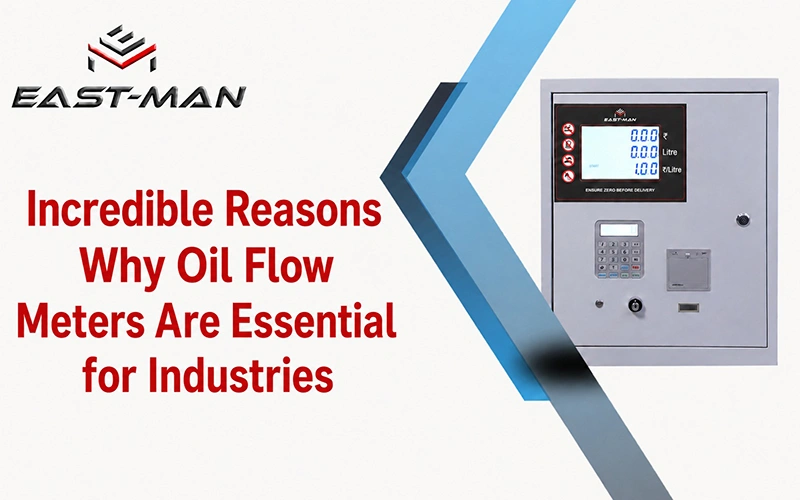
Accurate fuel measurement plays an important role in controlling operating costs. Modern fuel dispensers equipped with calibrated flow meters record the exact quantity of diesel transferred during every transaction. This data supports accurate billing, project costing, fleet analysis, and fuel allocation while minimizing disputes caused by manual estimates or inaccurate measurements.
4. Improved Business Continuity
Unexpected fuel shortages can interrupt production, stop heavy machinery, and affect backup power systems. A properly planned fuel storage solution enables organizations to maintain adequate reserve fuel, schedule timely deliveries, and avoid emergency procurement. This ensures smooth business operations even during supply disruptions or increased fuel demand.
5. Cleaner Sites and Reduced Spillage
Controlled dispensing equipment minimizes manual handling and significantly reduces fuel spills, routine drips, and environmental contamination. Dedicated pumps, hoses, and dispensing nozzles improve workplace cleanliness while reducing maintenance costs. Regular inspections and spill-response procedures further strengthen environmental and workplace safety standards.
6. Better Records for Audits and Fuel Analysis
Maintaining accurate fuel records becomes much easier with an organized storage and dispensing system. Businesses can track vehicle-wise fuel consumption, operator logs, stock reconciliation, and daily fuel issues. These detailed records simplify audits, improve inventory management, and help finance, maintenance, and operations teams make informed decisions using reliable fuel consumption data.
7. Scalable Configurations for Different Industries
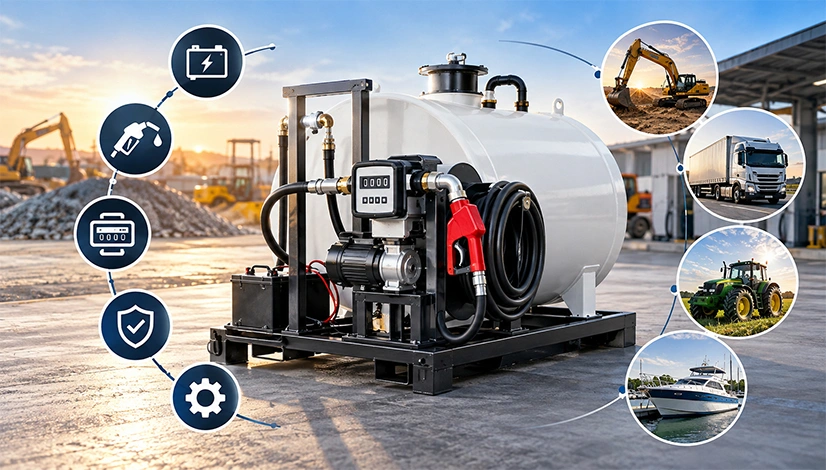
Every industry has different fuel management requirements. PESO-approved systems are available in multiple configurations, including fixed storage tanks, skid-mounted units, portable systems, mobile fuel bowsers, and truck-mounted solutions. Businesses can start with a configuration that matches their current fuel requirements and easily expand the system as operations grow, ensuring long-term flexibility and cost efficiency.
Where PESO-Approved Fuel Storage Solutions Add the Most Value
PESO-Approved Fuel Storage Solutions are designed to meet the fuel management needs of a wide range of industries. From manufacturing facilities and healthcare institutions to construction sites and logistics operations, these solutions improve fuel safety, storage efficiency, inventory control, and operational continuity. By implementing a structured fuel management system, organizations can reduce downtime, improve accountability, and ensure a reliable fuel supply for critical equipment.
Factories, Warehouses and DG Set Installations
Manufacturing facilities depend on diesel to operate generators, plant vehicles, forklifts, and heavy industrial equipment. A centralized fuel storage and dispensing system helps businesses receive, store, and distribute diesel safely while maintaining accurate consumption records. Warehouses and industrial facilities can continuously monitor generator fuel levels and schedule timely replenishment before reserve levels become critical, ensuring uninterrupted business operations.
Hospitals and Essential-Service Facilities
Hospitals and other essential-service organizations require dependable backup power during emergencies. PESO-Approved Fuel Storage Solutions enable facility managers to maintain planned diesel reserves, dispense fuel accurately, and document every transaction for better inventory management. These systems support emergency preparedness while ensuring that backup generators remain operational whenever they are needed.
Construction, Mining and Logistics Operations
Construction sites, mining projects, and logistics operations often involve equipment working across large or remote locations where fixed refuelling stations are unavailable. Mobile fuel bowsers and portable dispensing systems allow diesel to be delivered directly to machinery, reducing downtime and improving productivity. Fleet operators can also monitor fuel consumption, identify irregular usage patterns, and manage fuel costs more efficiently through accurate dispensing and reporting.

Mobile Fuel Bowser or Static Fuel Tank: Which Option Fits Better?
Choosing the right fuel storage solution depends on your daily fuel
consumption, site layout, operational requirements, and equipment
mobility. While both mobile fuel bowsers and static fuel tanks provide
safe diesel storage and dispensing, each serves a different purpose.
Understanding their advantages helps businesses invest in a solution
that improves operational efficiency, minimizes downtime, and ensures
reliable fuel availability.
A mobile fuel bowser is ideal for sites where multiple
machines operate across different work zones or remote locations. It
allows diesel to be transported directly to equipment, reducing travel
time and improving productivity on construction, mining, and logistics
projects.
A static fuel tank is better suited for facilities that
receive and dispense fuel from one fixed location, such as factories,
warehouses, hospitals, manufacturing plants, and DG set installations.
It provides a centralized fuel management system with better inventory
control and organized dispensing.
Both options can be integrated into
PESO-Approved Fuel Storage Solutions. Before making a
decision, businesses should compare daily fuel consumption,
refuelling points, storage capacity, dispensing speed, site access,
safety requirements, maintenance needs, and documentation to select the
most suitable configuration.
Key Features to Check Before Selecting PESO-Approved Fuel Storage Solutions
Selecting the right fuel storage and dispensing system requires more
than choosing the appropriate tank size. Businesses should evaluate the
complete solution to ensure long-term safety, operational efficiency,
and compliance with applicable regulations.
Important factors include construction quality, approval documents,
pump performance, flow-meter accuracy, calibration standards, hose and
nozzle quality, filtration systems, access control, and maintenance
requirements. A well-designed system provides accurate dispensing while
reducing operational risks and fuel losses.
It is equally important to review installation-related safety measures
such as equipment placement, earthing, ventilation, impact protection,
fire extinguishers, emergency isolation systems, spill-control
arrangements, and operator training. Where applicable, businesses
should obtain professional guidance regarding licences, NOCs, and
site-specific regulatory approvals before installation.
How Eastman Meters Supports Safer Industrial Fuel Management
Eastman Meters provides a comprehensive range of fuel management
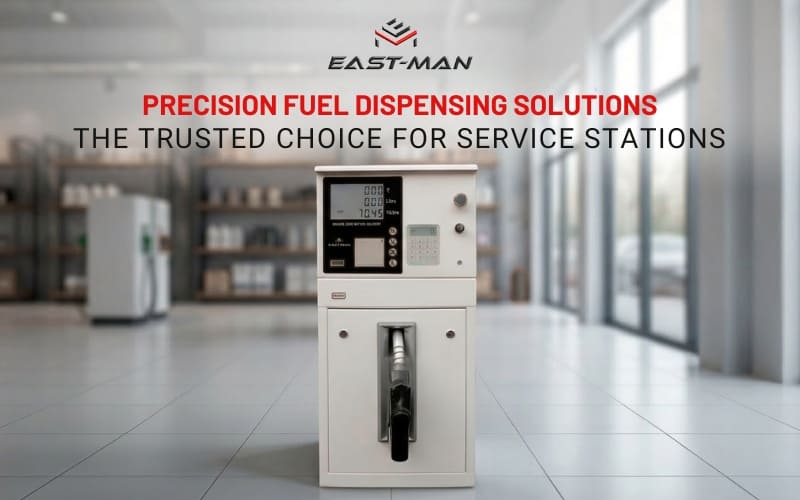
solutions, including mobile fuel bowsers, fuel dispensers, oil flow
meters, transfer pumps, hose reels, dispensing nozzles, and other
accessories designed for industrial applications. These products help
businesses build safe, accurate, and efficient fuel storage and
dispensing systems.
Every industrial site has unique operational requirements. Integrated
planning makes it possible to select the right combination of storage
tanks, dispensing equipment, metering systems, and safety accessories
based on actual fuel consumption, site conditions, and future expansion
plans.
Operations requiring fuel movement across multiple locations can benefit
from mobile fuel bowser solutions, while fixed industrial facilities
often achieve better efficiency with centralized fuel dispensing
systems. Before finalizing any configuration, businesses should
evaluate storage capacity, equipment mobility, metering accuracy,
safety provisions, maintenance requirements, and future operational
growth to ensure the selected solution meets long-term business needs.
Practical Compliance and Procurement Checklist
Before investing in or upgrading PESO-Approved Fuel Storage Solutions, businesses should carefully evaluate their operational requirements, safety standards, and regulatory obligations. A well-planned fuel storage system not only improves efficiency but also helps ensure long-term compliance, accurate fuel management, and reliable day-to-day operations.
Use the following checklist before selecting or procuring a fuel storage and dispensing system:
- Current daily and peak diesel consumption requirements.
- Required fuel reserve for generators, machinery, vehicles, or fleets.
- Whether a static, mobile, skid-mounted, or truck-mounted solution best suits your operations.
- Applicable PESO, petroleum, fire-safety, and local regulatory requirements.
- Tank certification, approval documents, and equipment documentation.
- Flow-meter accuracy, calibration process, and dispensing performance.
- Proper earthing, ventilation, access control, and emergency isolation systems.
- Availability of spill-response materials and fire-fighting equipment.
- Operator training, preventive maintenance schedules, and recordkeeping procedures.
- Supplier support for installation, commissioning, servicing, and after-sales assistance.
FAQs on Diesel Procurement and PESO-Approved Fuel Storage Solutions
No. The temporary 200-litre limit introduced in June 2026 was withdrawn with effect from 1 July 2026 after the government reviewed the fuel-supply position. Normal diesel sale and distribution arrangements have now been restored across the country.
Yes. The temporary direction requiring industrial, institutional, and commercial users to procure diesel through designated consumer pumps was withdrawn from 1 July 2026. However, diesel purchases remain subject to applicable laws, oil-company policies, and local operational requirements.
Yes. PESO-Approved Fuel Storage Solutions continue to support safer fuel handling, accurate dispensing, inventory control, reduced spillage, and better fuel record management. Businesses should always verify the applicable approval and licensing requirements for their specific site and installation.
A mobile fuel bowser is designed to transport diesel directly to machinery operating at different locations, whereas a static fuel tank stores and dispenses fuel from a fixed location. The ideal choice depends on daily fuel consumption, equipment movement, site layout, and operational requirements.
Accurate fuel metering records the exact quantity of diesel issued to each vehicle, machine, or department. This improves stock reconciliation, identifies abnormal fuel consumption, supports accurate billing, and minimizes losses caused by manual estimates or uncontrolled fuel transfers.
Conclusion: The Temporary Cap Is Gone, but Better Fuel Management Still Pays
The diesel procurement restrictions introduced in June 2026 were temporary, and normal fuel sale and distribution arrangements resumed from 1 July 2026. While the temporary 200-litre purchase cap has been withdrawn, the importance of PESO-Approved Fuel Storage Solutions remains unchanged. Their value lies in improving safety, fuel accuracy, inventory control, operational accountability, and business continuity—not in responding to a temporary government restriction.
Whether you operate a manufacturing plant, warehouse, hospital, construction site, logistics fleet, or DG set installation, a professionally designed fuel storage and dispensing system provides a safer, cleaner, and more efficient way to manage diesel. By selecting the right solution based on your operational requirements and ensuring compliance with applicable approvals, businesses can reduce fuel losses, improve productivity, and maintain uninterrupted operations.
If you are planning to implement or upgrade your industrial fuel storage system, consult experienced professionals to identify the most suitable configuration for your facility. The right combination of storage tanks, fuel dispensers, flow meters, pumps, and safety accessories can help build a reliable and future-ready fuel management system.