When it comes to fuel transportation, one of the most frequently asked questions in the logistics and petroleum industry is: What is the fuel tanker truck capacity? The answer is not one-size-fits-all because fuel tank truck capacity varies widely depending on the truck size, transportation requirements, road regulations, and fuel type.
Whether you’re involved in oil distribution, large-scale construction, fleet management, or fuel retailing, understanding the capacity of a fuel truck is essential for planning efficient fuel logistics. This guide breaks down everything you need to know about tanker truck fuel capacity, including commonly used sizes, regulations, and industry best practices.
Accurate capacity planning becomes even more effective when paired with reliable Eastman fuel measurement solutions designed for modern fuel transport and distribution systems.
What Is Fuel Tanker Truck Capacity?
Fuel tanker truck capacity refers to the total volume of fuel that a tanker truck can store and transport safely. This capacity changes based on factors such as:
- Tanker size
- Axle load limits
- Type of fuel (diesel, petrol, gas, aviation fuel, etc.)
- Road and transport regulations in the region
For most countries, tanker trucks are engineered to comply with government standards to ensure safe transportation of flammable liquids.
Common Fuel Tanker Truck Capacities
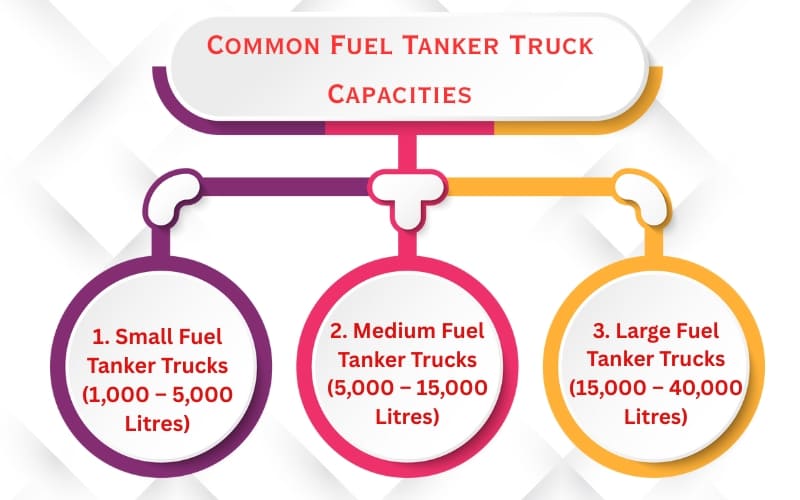
Below are the widely recognized capacities of fuel tanks used for commercial transportation:
1. Small Fuel Tanker Trucks (1,000 – 5,000 Litres)
These are ideal for:
- Local fuel delivery
- Construction and agriculture site refueling
- On-road emergency fuel services
These compact sizes allow convenient mobility and faster on-site fueling. These compact tanker sizes are commonly used in mobile fuel bowsers for on-site refueling at construction, mining, and agricultural locations.
2. Medium Fuel Tanker Trucks (5,000 – 15,000 Litres)
This category is the most commonly used in commercial operations.
Typical uses include:
- Petrol pumps
- Fleet refueling
- Industrial sites
These offer the perfect balance between maneuverability and carrying volume. Medium-capacity tanker trucks are often integrated with high-accuracy fuel dispensers for controlled delivery at petrol pumps, fleet yards, and industrial facilities.
3. Large Fuel Tanker Trucks (15,000 – 40,000 Litres)
These high-capacity tankers are designed for long-distance transport.
They are often used for:
- Interstate fuel supply
- Oil companies
- Large distributors
The tanker truck fuel capacity in this range depends on trailer size, regulatory weight limits, and the number of compartments.
Capacity of Truck Fuel Tank vs Tanker Capacity
It’s important to differentiate between:
Fuel Tank Capacity of Truck (Engine Fuel Tank)
This refers to the amount of diesel stored in the truck’s own engine tank, usually 150–600 litres, depending on the model and engine type.
Truck Tank Capacity (Fuel-Carrying Tank on Trailer/Body)
This refers to the actual tanker truck capacity used for transporting petrol, diesel, kerosene, or aviation fuel.
Both have different functions but are often confused in general conversations.
Gas Tanker Capacity
Gas tanker capacity (for LPG or LNG) is measured differently due to the pressurized storage standards.
Typical LPG/LNG gas tankers have capacities ranging from:
- 5,00 0 litres (small units)
- Up to 57,000 litres (international highway units)
These tankers are built to withstand higher pressures and temperature variations.
Factors That Influence Fuel Tanker Truck Capacity
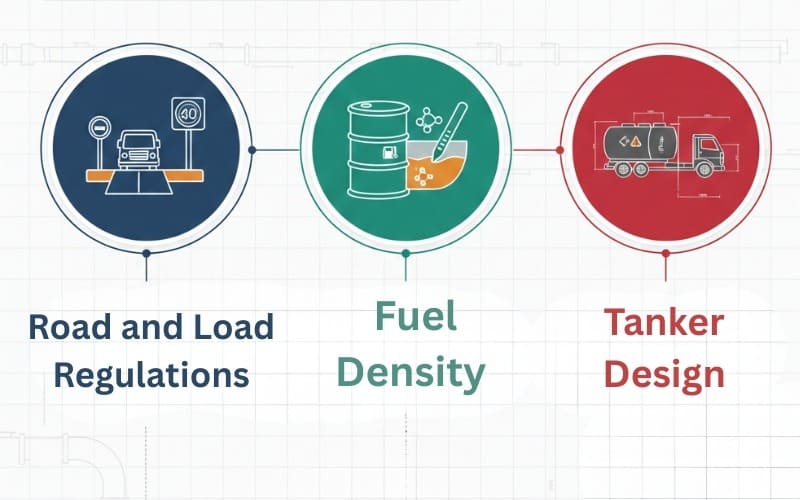
Several engineering and logistical considerations determine the capacity of truck fuel tank units used in oil transportation:
1. Road and Load Regulations
Highways and state laws impose limits on:
- Gross vehicle weight
- Axle load per tyre
- Fuel type allowances
2. Fuel Density
For example:
- Petrol is lighter than diesel
- Aviation fuel requires stringent safety margins
Different fuels affect how much volume can be safely transported.
3. Tanker Design
The tanker may include:
- Steel or aluminum construction
- Multi-compartment layouts
- Baffles to prevent sloshing
- Pressure-resistant shells (for gas tankers)
Why Understanding Tanker Truck Capacity Matters
Knowing the correct tanker truck capacity helps businesses:
- Reduce transportation costs
- Improve route and delivery planning
- Enhance fuel distribution efficiency
- Ensure compliance with legal load limits
Fuel distributors, oil companies, and large fleet operators depend heavily on accurate capacity planning to optimize operations.
From small 1,000-litre bowsers to massive 40,000-litre articulated tankers, fuel tanker truck capacity varies widely based on design, regulations, and industry requirements. Understanding these specifications helps businesses choose the right equipment for safe and efficient fuel transportation. Whether you’re handling petrol, diesel, kerosene, or gas, selecting a tanker with the appropriate capacity is key to operational excellence. Understanding tanker capacity also helps operators align fuel delivery volumes with downstream systems, including the petrol pump machine working mechanism used at retail fuel stations.
FAQs on Fuel Tanker Truck Capacity
1. What is the typical fuel tank truck capacity?
Most tanker trucks range from 5,000 to 40,000 litres, depending on the truck size and transportation regulations.
2. What is the capacity of a fuel truck used at petrol pumps?
Fuel trucks delivering to petrol pumps commonly carry 10,000 to 20,000 litres of fuel.
3. How much fuel can a gas tanker carry?
LPG and LNG gas tankers typically carry 5,000 to 57,000 litres, depending on pressure standards and road limits.
4. What is the fuel tank capacity of a truck engine (not the tanker)?
Most heavy-duty truck engines have fuel tanks ranging from 150 to 600 litres.
5. What determines tanker truck fuel capacity?
Key factors include road weight limits, tank design, number of compartments, and the type of fuel being transported.